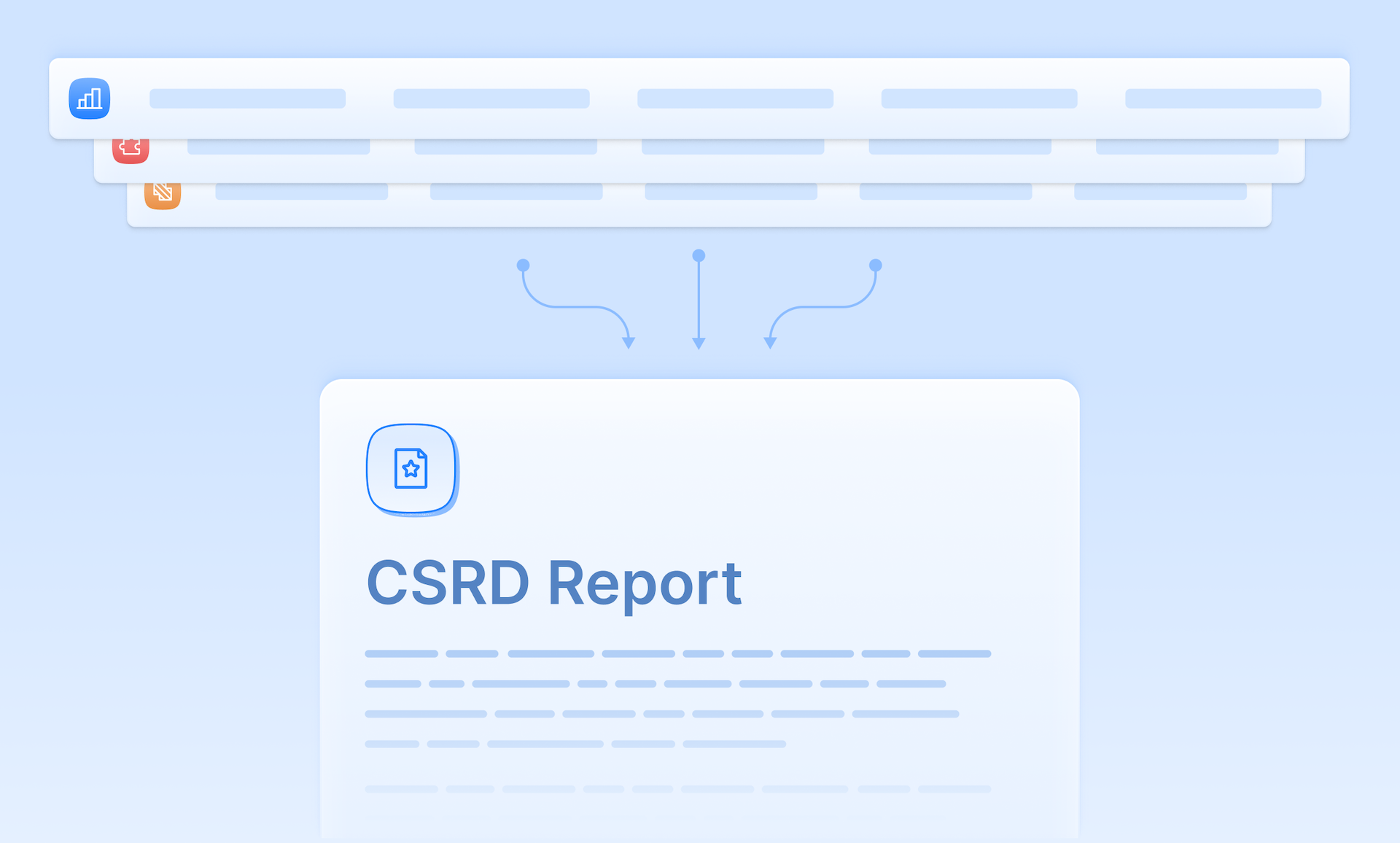
Product data is the heart of CSRD reporting
At the core of the Corporate Sustainability Reporting Directive (CSRD) lies the need for detailed, transparent, and reliable product data. This data forms the foundation for assessing environmental impacts, from raw materials to the product's end-of-life stage. Without comprehensive product data, it becomes nearly impossible to to achieve reliable CSRD compliance or demonstrate sustainability efforts to stakeholders.
Why CSRD reporting is difficult without structured product data
Many organizations struggle with CSRD reporting because sustainability data is scattered across multiple systems and documents. Product information often exists in supplier PDFs, spreadsheets, environmental assessments, and separate reporting tools.
This fragmented structure makes it difficult to ensure the consistency and traceability required for CSRD sustainability reporting.
Common challenges include:
- Inconsistent supplier documentation
- Data stored in incompatible formats
- Limited traceability between product data and environmental metrics
- Manual data consolidation across departments
- Static reports that quickly become outdated
Without structured product data, companies risk turning CSRD reporting into a repetitive and time-consuming manual process.
What is deep-linked product data?
Deep-linked product data refers to a comprehensive dataset that connects every stage of a product’s lifecycle. It includes granular details about raw materials, production methods, emissions, energy use, and disposal processes. This level of detail not only simplifies reporting but also provides actionable insights into areas for improvement, enabling businesses to enhance both compliance and sustainability. Instead of rebuilding sustainability reports from scratch each year, organizations can reuse verified datasets across multiple regulatory frameworks.
This approach supports:
- CSRD reporting
- Environmental Product Declarations (EPDs)
- Life Cycle Assessments (LCAs)
- ESG disclosures and sustainability reporting
EandoX takes a novel approach and splits up your products data into separate entities like components, packaging, transport, factories and more. This allows you to reuse entities across your product range and have their updates be propagated throughout your catalogue.
Updating product data in CSRD reporting
Keeping product data accurate and up to date is crucial for effective CSRD reporting. Regular updates ensure that changes in supply chains, production methods, or material sources are accurately reflected. Companies should establish a streamlined process to gather updated data from suppliers and internal teams, ideally supported by automated software that minimize manual work and reduce errors.
With EandoX, you can invite your suppliers and request components from them. When they update their components, your products will update automatically. This ensures accurate and up-to-date data, and eliminates the need for regular check-ins and followups.
Deep-linked product data provides a scalable foundation for efficient CSRD reporting, enabling companies to connect sustainability metrics directly to structured product data. By transforming fragmented documentation into reusable datasets, organizations can improve data accuracy, reduce reporting effort, and maintain continuous readiness for evolving CSRD compliance requirements.
Ensuring CSRD compliance with EandoX
EandoX software is designed to simplify the complexities of CSRD compliance. By centralizing product data in a secure, cloud-based system, it enables companies to track, analyze, and report environmental performance effortlessly. With automated data updates, integration with supplier systems, and robust reporting tools, EandoX ensures that your business meets CSRD requirements while uncovering new opportunities for sustainable growth.


.jpg)